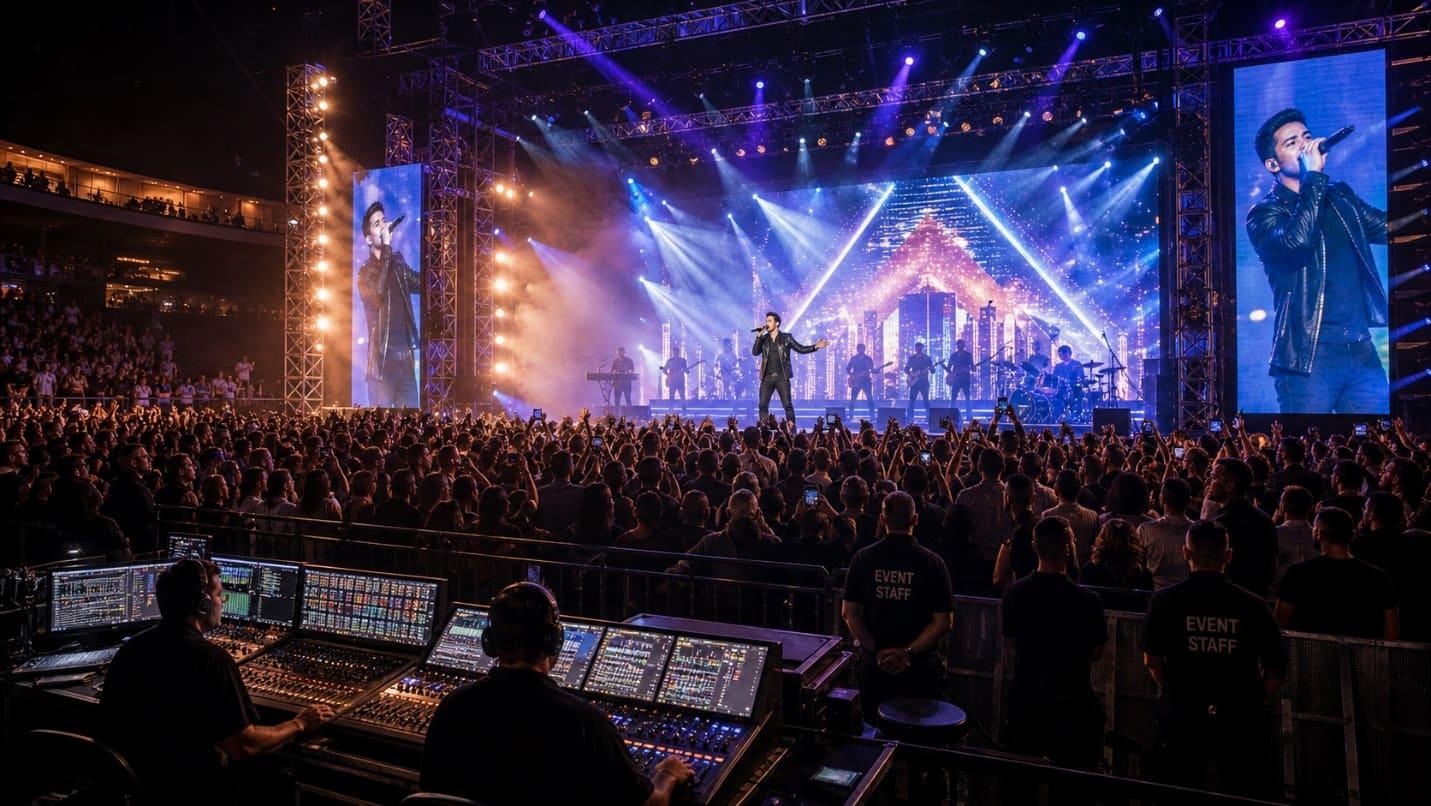
Concert planning is the complete process of organizing, designing, producing, and executing a live music event. A successful concert is not only about bringing artists and audiences together. It is about creating a powerful live experience where music, stage production, lighting, sound, crowd energy, artist performance, and audience emotion work together.
Professional concert planning requires creativity, technical knowledge, strong coordination, safety management, artist handling, audience engagement, and smooth on-ground execution. Every detail must be planned carefully to make the event memorable for the audience and comfortable for the artists.
What is Concert Planning?
Concert planning means managing every part of a music event from the first idea to the final performance. It includes selecting the artist, choosing the venue, planning the stage, arranging sound and lighting, managing tickets, promoting the event, handling guests, and supervising the full event day.
Key areas of concert planning include:
- Event concept development
- Artist selection and coordination
- Venue selection
- Stage design and production
- Sound, lighting, and LED setup
- Ticketing and registration support
- Audience management
- Security and safety planning
- Backstage and green room management
- Media and promotional activities
- Sponsor and brand integration
- On-ground execution
Why Concert Planning Matters
A concert must be energetic, organized, and emotionally powerful. Poor planning can create delays, technical issues, crowd problems, and a bad experience for both artists and audiences.
Concert planning matters because it helps to:
- Create a professional live music experience
- Ensure smooth artist performance
- Maintain proper program flow
- Manage audience entry and movement
- Deliver high-quality sound and lighting
- Reduce technical and operational problems
- Improve crowd safety and comfort
- Strengthen sponsor and brand visibility
- Build strong audience engagement
- Create memorable moments for music lovers
Artist Selection and Coordination
Artists are the heart of a concert. The success of the event depends greatly on selecting the right artist for the right audience. Proper artist coordination ensures that performers feel respected, prepared, and comfortable before going on stage.
Artist coordination includes:
- Artist booking support
- Communication with artist managers
- Performance schedule planning
- Contract and requirement discussion
- Artist arrival and departure coordination
- Green room arrangements
- Hospitality support
- Sound check planning
- Rehearsal timing
- Stage entry and exit coordination
- Performance duration management
- Payment and documentation support
Understanding the Audience
A successful concert must match the taste, age group, lifestyle, and expectations of the audience. Audience understanding helps choose the right artist, venue, ticket price, promotion strategy, and event experience.
Audience planning includes:
- Identifying the target audience
- Understanding music preferences
- Estimating expected attendance
- Planning ticket categories
- Creating audience engagement ideas
- Designing entry and seating systems
- Planning food, merchandise, and activity zones
- Ensuring comfort and safety
Concert Concept and Theme
Every concert should have a clear identity. The concept and theme help create the mood, visual style, communication tone, and audience experience.
Concert concept development includes:
- Selecting the event theme
- Creating the concert name and identity
- Planning the visual direction
- Designing the event mood
- Developing stage and lighting style
- Creating promotional message
- Planning audience experience
- Aligning artists, sponsors, and production
Venue Selection and Layout Planning
The venue is one of the most important parts of concert planning. It should match the expected crowd size, production needs, safety requirements, and audience comfort.
Venue planning includes:
- Selecting a suitable venue
- Checking audience capacity
- Planning stage placement
- Designing audience standing or seating areas
- Creating VIP zones
- Planning artist entry and backstage areas
- Managing sponsor booths and brand zones
- Planning food and refreshment areas
- Ensuring parking and transport support
- Checking emergency exits and safety access
- Planning crowd movement routes
Stage Design and Production
The stage is the main visual focus of a concert. A strong stage design makes the performance more powerful and creates a premium experience for the audience.
Stage production includes:
- Main stage structure
- Stage backdrop design
- LED screen placement
- Lighting truss setup
- Sound system positioning
- Artist movement space
- Band equipment placement
- DJ booth or performance setup
- Camera and media platform planning
- Stage branding and sponsor placement
- Safety checking and technical testing
Sound, Lighting, and LED Setup
Technical production can make or break a concert. Clear sound, dramatic lighting, and high-quality visuals help create energy, emotion, and audience excitement.
Technical setup includes:
- Professional sound system
- Microphones and instruments
- Monitor speakers for artists
- Lighting design
- Moving heads and stage effects
- LED screens
- Visual content management
- Live camera feed
- Power supply and generator backup
- Technical rehearsal
- Real-time technical monitoring
Backstage and Green Room Management
Backstage management is essential for artist comfort and smooth performance flow. A well-managed backstage area helps artists prepare properly before appearing on stage.
Backstage management includes:
- Green room setup
- Artist waiting area
- Food and beverage support
- Dressing and makeup area
- Security-controlled access
- Artist assistant coordination
- Performance cue management
- Instrument handling
- Stage entry timing
- Emergency support
Ticketing and Registration
Ticketing must be simple, secure, and well-organized. A smooth ticketing system helps control audience entry and improves the guest experience.
Ticketing support includes:
- Ticket category planning
- Online ticketing support
- Physical ticket management
- QR code or barcode entry system
- Registration desk setup
- Guest list management
- VIP pass management
- Wristband or access card distribution
- Entry gate coordination
- Ticket verification support
Marketing and Promotion
Promotion is very important for a concert because it builds awareness, excitement, and ticket sales. A strong marketing plan should start early and continue until the event day.
Concert promotion may include:
- Social media campaign
- Artist announcement posts
- Teaser videos
- Countdown content
- Influencer promotion
- Media coverage
- Press release
- Campus or community activation
- Billboard and outdoor promotion
- Radio or TV promotion
- Sponsor-led promotion
- Ticket sales campaign
Sponsorship and Brand Integration
Concerts offer strong opportunities for sponsors because they attract energetic audiences and create emotional engagement. Proper sponsor integration helps brands become part of the concert experience.
Sponsor integration may include:
- Naming rights
- Logo placement
- Stage branding
- LED screen advertisement
- Ticket and wristband branding
- Sponsor booths
- Product sampling
- Brand activation games
- VIP invitations
- Social media mentions
- Artist content collaboration
- Post-event recap visibility
Audience Engagement
A concert should not only be watched. It should be felt and remembered. Audience engagement keeps the crowd excited before, during, and after the performance.
Audience engagement ideas include:
- Fan contests
- Photo booths
- Social media challenges
- Live crowd interaction
- LED screen audience moments
- Meet-and-greet opportunities
- Merchandise zones
- Sponsor engagement games
- Post-event highlight sharing
Security and Crowd Control
Concerts often gather large and energetic crowds. Proper security and crowd control are necessary to protect the audience, artists, staff, and equipment.
Security planning includes:
- Entry gate security
- Bag checking support
- Crowd barriers
- VIP and artist security
- Stage-front control
- Emergency exit planning
- Medical support
- Fire safety support
- Security team briefing
- Police or authority coordination if needed
- Lost and found support
- Emergency response plan
Media and Content Production
A concert creates valuable content for future promotion, sponsor reporting, and brand visibility. Professional media coverage helps extend the concert impact beyond the event day.
Media and content production includes:
- Photography
- Videography
- Artist interview content
- Behind-the-scenes content
- Live social media updates
- Drone shots if permitted
- Crowd reaction videos
- Sponsor content capture
- After-movie production
- Press coverage collection
- Post-event highlight reels
On-Ground Execution
On-ground execution is the most important phase of concert planning. This is where every team must work together to deliver a smooth live experience.
On-ground execution includes:
- Final venue inspection
- Team briefing
- Vendor coordination
- Artist arrival management
- Sound check supervision
- Guest entry control
- Crowd movement monitoring
- Technical supervision
- Backstage coordination
- Stage cue management
- Sponsor booth monitoring
- Real-time problem-solving
Post-Event Management
A professional concert plan includes post-event activities. These help maintain audience connection, satisfy sponsors, and prepare for future events.
Post-event management includes:
- Venue cleanup
- Equipment dismantling
- Artist settlement
- Vendor payment coordination
- Sponsor reporting
- Media coverage collection
- Photo and video release
- Audience feedback review
- Social media recap
- Thank-you posts
- Performance analysis
- Final event report
Types of Concerts We Manage
Concert planning can be applied to different types of music events depending on the audience, scale, and purpose.
Common concert types include:
- Music concerts
- University concerts
- Corporate music nights
- Cultural concerts
- Band festivals
- Solo artist shows
- DJ nights
- Charity concerts
- Brand-sponsored concerts
- Outdoor concerts
- Indoor premium concerts
- Large-scale music festivals
Our Main Focus
Our focus is to create concerts that are energetic, organized, safe, visually powerful, and memorable. We believe a concert should deliver a premium experience for both the audience and the artists.
We focus on:
- Artist comfort
- Audience excitement
- High-quality production
- Powerful sound and lighting
- Smooth program flow
- Professional backstage management
- Safe crowd control
- Sponsor visibility
- Strong media impact
- Memorable live experience
Conclusion
Concert planning is a combination of music, creativity, production, logistics, safety, promotion, and teamwork. A professionally planned concert can turn a musical performance into a powerful live experience.
With the right artist coordination, strong technical production, smooth audience management, and flawless on-ground execution, a concert can create unforgettable memories for the audience, valuable exposure for sponsors, and a professional platform for artists.