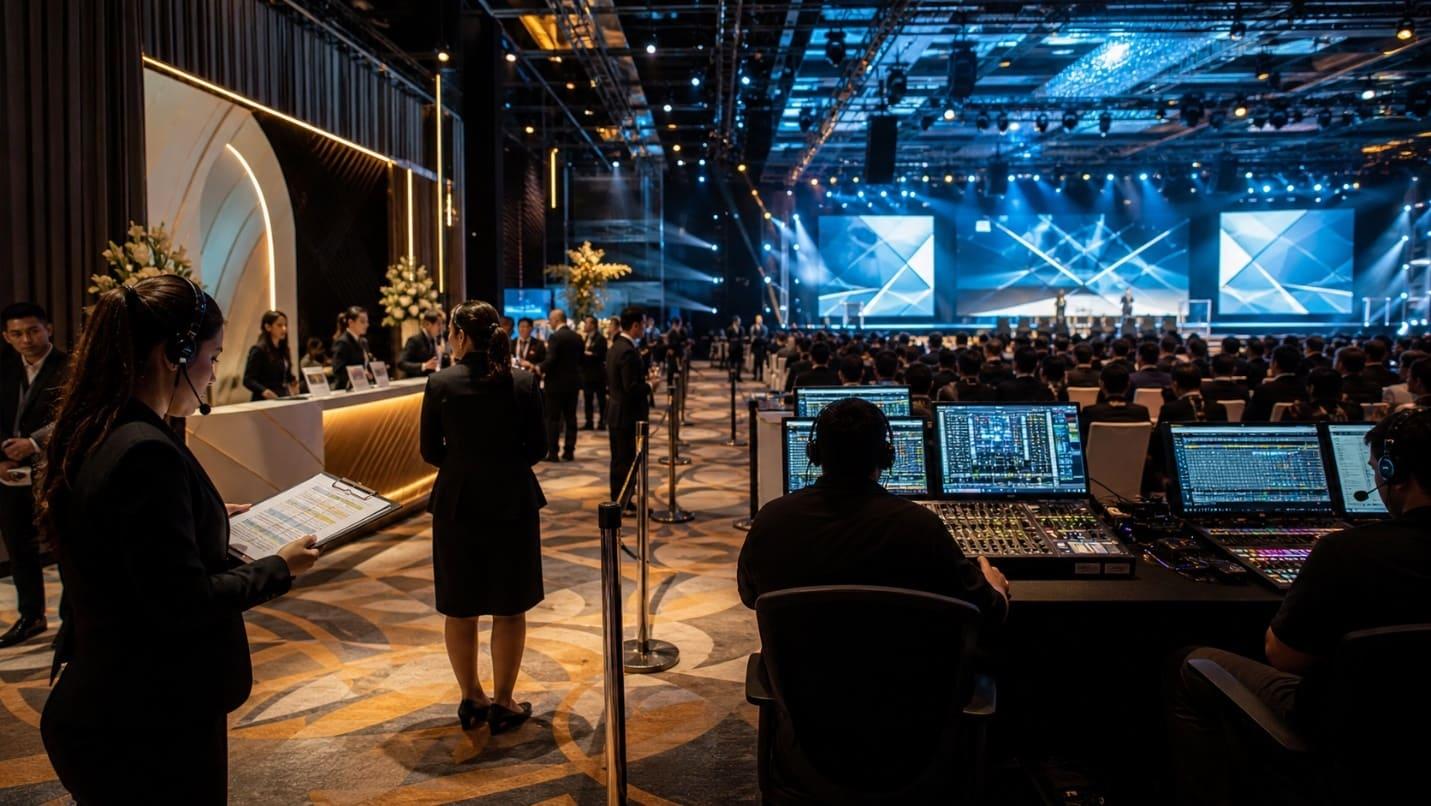
Event management and production is the complete process of planning, designing, organizing, and executing an event from the first idea to the final experience. A successful event is not only about arranging a venue and inviting guests. It is about creating a smooth, meaningful, engaging, and memorable experience for the audience, clients, sponsors, performers, and partners.
Professional event management brings together creativity, strategy, logistics, technical production, branding, audience engagement, and on-ground coordination. Every detail must work together to make the event look professional, feel organized, and deliver the expected result.
What is Event Management?
Event management focuses on the overall planning and coordination of an event. It includes everything that needs to be arranged before, during, and after the event.
Key areas of event management include:
- Understanding the event objective
- Developing the event concept
- Preparing the event plan
- Selecting the right venue
- Creating the event schedule
- Managing guests and invitations
- Coordinating with vendors and suppliers
- Managing branding and promotional materials
- Handling registration and entry systems
- Planning audience movement
- Managing security and safety support
- Ensuring smooth on-ground execution
What is Event Production?
Event production focuses on the creative and technical side of the event. It is responsible for how the event looks, sounds, and feels to the audience.
Key areas of event production include:
- Stage design and setup
- Lighting design
- Sound system arrangement
- LED screen setup
- Visual content display
- Backdrop and décor setup
- Technical equipment management
- Artist or speaker stage coordination
- Backstage management
- Show direction and timing
- Live production control
- On-ground technical support
Why Event Management and Production Matters
A professionally managed event creates a strong impression. It helps brands, companies, and organizations communicate their message clearly and connect with their audience in a meaningful way.
It matters because it helps to:
- Create a professional brand image
- Deliver a smooth guest experience
- Avoid confusion and operational mistakes
- Manage time, people, and resources properly
- Increase audience engagement
- Improve sponsor and partner visibility
- Make the event visually attractive
- Strengthen business relationships
- Build trust with guests and clients
- Create memorable moments for the audience
Event Concept Development
Every successful event starts with a strong concept. The concept defines the theme, purpose, style, audience experience, and overall direction of the event.
Concept development includes:
- Understanding the purpose of the event
- Identifying the target audience
- Selecting the event theme
- Creating the event mood and style
- Planning the guest experience
- Designing the event journey
- Developing creative ideas
- Setting the tone of the event
- Connecting the concept with the brand message
Strategic Planning
Strategic planning ensures that every part of the event is organized before execution. It helps the team understand what needs to be done, when it needs to be done, and who will be responsible.
Strategic planning includes:
- Event timeline preparation
- Budget planning
- Team responsibility distribution
- Venue planning
- Vendor planning
- Guest planning
- Production planning
- Marketing and promotion planning
- Risk management planning
- Backup planning for emergencies
Venue Selection and Layout Planning
The venue plays a major role in the success of an event. A good venue should match the event type, audience size, technical needs, and overall experience.
Venue planning includes:
- Selecting a suitable venue
- Checking venue capacity
- Planning entry and exit points
- Designing audience seating
- Planning VIP areas
- Creating sponsor zones
- Managing backstage areas
- Planning food and refreshment areas
- Arranging parking and transport support
- Ensuring safety and emergency access
Stage Design and Setup
The stage is one of the most important visual elements of an event. It creates the main focus point for the audience and represents the event’s quality.
Stage design includes:
- Main stage structure
- Backdrop design
- LED screen placement
- Lighting placement
- Sound system positioning
- Branding placement
- Speaker or artist movement
- Stage entry and exit planning
- Safety checking
- Visual balance and premium presentation
Lighting, Sound, and LED Production
Technical production creates the atmosphere of the event. Proper lighting, sound, and LED visuals make the event more powerful, attractive, and enjoyable.
Technical production includes:
- Professional sound system
- Microphones and speaker setup
- Stage lighting
- Ambient lighting
- LED screen installation
- Visual content management
- Projection support
- Power backup
- Technical testing
- Live technical monitoring
Branding and Visual Presentation
Branding makes the event recognizable and professional. It helps sponsors, partners, and organizers receive proper visibility throughout the event.
Branding elements include:
- Event logo placement
- Sponsor logo placement
- Stage branding
- Entrance branding
- Backdrop design
- Banners and standees
- Wristbands and tickets
- Digital screen branding
- Photo booth branding
- Social media visual materials
- Sponsor activation branding
Guest Management
Guest management ensures that every attendee feels welcomed, guided, and comfortable throughout the event.
Guest management includes:
- Invitation management
- RSVP support
- Registration desk setup
- Ticket checking
- Guest reception
- VIP guest handling
- Seating guidance
- Information desk support
- Crowd movement support
- Guest feedback collection
Audience Engagement
A successful event should not only be watched. It should be experienced. Audience engagement helps people participate, enjoy, and remember the event.
Audience engagement activities may include:
- Interactive games
- Contests and giveaways
- QR code activities
- Photo booths
- Live polls
- Social media challenges
- Brand experience zones
- Fan engagement areas
- Lucky draws
- On-stage audience moments
Vendor and Supplier Coordination
A large event depends on many vendors and suppliers. Proper coordination ensures that everything is delivered on time and according to quality standards.
Vendor coordination includes:
- Sound and lighting vendors
- Stage setup vendors
- LED screen providers
- Decorators
- Branding suppliers
- Security teams
- Food and beverage vendors
- Cleaning teams
- Transport providers
- Technical support teams
Backstage and Production Team Management
Backstage management is important for smooth program flow. It ensures that speakers, artists, performers, hosts, and technical teams are ready at the right time.
Backstage management includes:
- Artist or speaker coordination
- Green room management
- Performance schedule control
- Stage entry and exit planning
- Rehearsal coordination
- Technical cue management
- Host coordination
- Production team briefing
- Emergency communication
- Time-to-time program monitoring
Security, Safety, and Crowd Control
Security and safety are essential for any professional event. A well-managed event should protect guests, performers, staff, and equipment.
Security and safety planning includes:
- Entry gate security
- Bag checking support
- VIP security
- Crowd control barriers
- Emergency exit planning
- Fire safety support
- Medical support
- Volunteer support
- Police or local authority coordination if needed
- Safety briefing for the team
Logistics and Operations
Logistics keeps the event running smoothly behind the scenes. It ensures that people, materials, equipment, and services are in the right place at the right time.
Logistics and operations include:
- Equipment transportation
- Setup and dismantling schedule
- Staff movement
- Vendor delivery coordination
- Power and generator support
- Parking management
- Storage area planning
- Food and refreshment support
- Cleaning and waste management
- Final operational checklist
Marketing and Promotion Support
Event promotion helps attract the right audience and build excitement before the event.
Marketing support may include:
- Social media promotion
- Press release support
- Media coverage coordination
- Influencer campaigns
- Digital posters
- Event teasers
- Countdown content
- Ticket promotion
- Sponsor promotion
- Post-event highlights
Sponsorship Integration
Sponsors are an important part of many events. Proper sponsorship integration ensures that sponsors receive value and visibility.
Sponsorship integration includes:
- Sponsor logo placement
- Naming rights
- Stage branding
- LED screen ads
- Sponsor booths
- Product display
- Sampling activities
- Audience engagement games
- VIP invitations
- Social media mentions
- Post-event recap visibility
On-Ground Execution
On-ground execution is where all planning becomes reality. The event team must supervise every part carefully to ensure a smooth and professional experience.
On-ground execution includes:
- Final venue checking
- Team briefing
- Vendor monitoring
- Guest entry management
- Program flow control
- Technical supervision
- Branding placement checking
- Security coordination
- Audience support
- Problem-solving during the event
Post-Event Management
The event does not end when the program finishes. Post-event management helps measure success, maintain relationships, and create future opportunities.
Post-event management includes:
- Event closing coordination
- Venue cleanup
- Equipment dismantling
- Vendor settlement
- Sponsor reporting
- Media coverage collection
- Photo and video highlights
- Social media recap
- Guest feedback review
- Performance analysis
- Final event report
Types of Events We Manage
Event management and production can be applied to many different types of events.
Common event types include:
- Corporate events
- Concerts
- Sports events
- Fan engagement events
- Product launches
- Brand activations
- Exhibitions
- Conferences
- Seminars
- Award ceremonies
- Cultural programs
- University events
- Private premium gatherings
- Business networking events
Our Main Focus
Our focus is to create events that are creative, organized, visually impressive, and meaningful. We believe every event should have a clear purpose, strong planning, professional production, and smooth execution.
We focus on:
- Creativity
- Precision
- Professionalism
- Audience experience
- Brand value
- Technical quality
- Smooth coordination
- Strong visual presentation
- Meaningful engagement
- Memorable execution
Conclusion
Event management and production is the combination of planning, creativity, technology, teamwork, and execution. A professionally managed event can turn a simple idea into a powerful experience. It helps brands connect with people, organizations communicate their message, and audiences enjoy moments that they remember for a long time.